

DIFFICULY
★☆☆☆☆
1 night, 2 days
2-6 people
From
From ¥275,000 (tax included)
森林浴, リトリート, 食体験
OVERVIEW
“Okutama: Walking Through the Other Tokyo That Supported Edo”
Today, Okutama is often regarded as a remote outskirt of Tokyo.
However, during the Edo period, these mountainous rural villages were “the other Tokyo that supported the great city of Edo from behind the scenes.”
Timber, water, lime, charcoal—
People in this region harnessed nature’s bounty through their craftsmanship, loading it onto the Tama River to transport it to Edo.
This tour is not merely a walk through Okutama; it is a journey to rediscover the relationship between the modern city and the mountains—and the roots of our own lives—by tracing the “memories of mountain life and labor that supported Edo.”
Tour Itinerary:
① [Hatonosu Station]
A place that once served as a hub for transporting goods between the mountains and Edo.
This was the starting point of the “rafting” route used to supply timber during the Edo period.
People would fell giant trees and float them down the Tama River to be used in the reconstruction of Edo Castle and bridge construction.
From here, participants will set out on a journey, experiencing the connection between nature and the city as if setting a modern “raft of the heart” adrift.
②【Otsukayama Hike】
Climb the “mountain” that the people of Edo once walked to worship.
In the past, ascetics and artisans worked and lived here while offering prayers to the mountain gods.
From the summit, looking out toward the distant Edo landscape, you’ll experience firsthand “how closely Edo was connected to the mountains.”
Amid the mountain’s silence, the values of the Japanese people of old—who lived in harmony with nature while revering and respecting it—come to the surface.
③ [Food and Conversation at Satoro]
After descending the mountain, head to “Satoro,” a space that reinterprets Edo-period “mountain life” for the modern era.
Firewood, charcoal, wild herbs, fermentation—the “wisdom of the mountains” once delivered to Edo has been reimagined through modern design and cuisine, breathing new life into these traditions.
Here, through dialogue with local key figures, we will take time to reflect together on “how we can apply the memories of Edo to the present” and “what the future relationship between cities and mountains should be.”
④ [Rejuvenate in the Wood-Fired Sauna]
For the people of Edo, “water” and “fire” were symbols of purification.
This sauna, fueled by local spring water and firewood, offers a “modern purification ritual” that allows us to reset our minds and bodies while experiencing the essence of life in the past.
As you sweat and immerse yourself in cold water, a sense of unity between nature and history will wash over you.
The message this tour conveys: “The city and the mountains are not separate.” This was true in the Edo period, and it remains true today. For us to live in the city, we rely on the blessings of nature somewhere and the handiwork of others.
This journey through Okutama offers an opportunity to uncover the often-hidden “story of these connections” and to reexamine how we, in the modern world, can “reconnect the city and nature.”
A two-day, one-night retreat tracing the history of “Okutama,” the region that supported Edo’s prosperity.
Enjoy a forest bathing trek along the ancient “Otsukayama” trail, once used to transport timber and charcoal, before heading to “Satologue,” a modern satoyama hub.
Gazing out over the garden of a former fish farm and sweating it out in a wood-fired sauna is truly a “modern purification ritual.”
We invite you to experience a luxurious weekend where you can feel the connection between the city and nature, accompanied by gourmet cuisine that reimagines the local terroir.


HIGHLIGHTS
“Forest Bathing Hike” on Otsuka Mountain, an Ancient Edo-Period Trail: Escape the hustle and bustle of the city and breathe in the forest air
Otsuka Mountain, once used to transport timber and charcoal, is now gaining renewed attention as an ideal spot for “forest bathing” to heal both body and mind. Follow a course recommended by the foundation’s forest guides to encounter tunnels of broadleaf trees, seasonal flowers and plants, and ancient, towering trees. From the 920-meter summit, looking down upon the distant Shinjuku subcenter (the former Edo), you’ll feel the distance between the city and nature with your whole body.
A former fish farm is reborn as a “garden.” Experience the cycle of the satoyama at Satologue
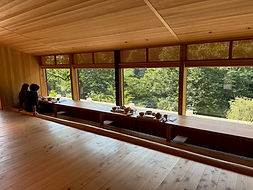
The grounds of the Satologue lodging preserve the remnants of a former fish farm that once operated alongside a forestry business. Today, the site has been beautifully revitalized as a biotope crisscrossed by waterways and a private farm. As you stroll through this garden, where spring water fills every fish tank, and listen to the staff share “Stories Woven with the Countryside,” you’ll enjoy a profound stay that makes you feel not just like a guest, but a part of this landscape.
“Railway Gastronomy” and “Wood-Fired Sauna”: Experience the warmth and bounty of the land with all five senses
Dinner is served at the restaurant “Tokiro.” Here, you’ll savor dishes that reinterpret ingredients from the Tama River basin and the mountain’s wisdom—such as firewood, charcoal, and fermentation—in a contemporary style. After dinner, head to the authentic wood-fired sauna “Fubokusui.” This “modern purification” experience—featuring a sauna heated with wood from Okutama and a refreshing cold plunge pool—will relieve the fatigue of hiking and deeply rejuvenate both body and mind.
ITINERARY
Theme: A Journey Tracing Edo’s “Water Sources” and “Heat Sources,” Concluding in a Modern “Village”
[Day 1]
“Movement”: Walk the mountain trails that supported Edo, and proceed to a modern purification ritual. This day involves trekking along the “Path of Labor” that once transported timber and charcoal to Edo, and soothing your fatigue in a “wood-fired sauna.”
• 10:00
Meeting Point: JR Ome Line “Hatonosu Station”
◦ Introduction to the Story: This area was once a hub for “rafting” timber to Edo. Listen to the guide’s tale of “the connection between Edo and Okutama,” and begin a journey to reexamine modern urban life.
• 10:30
Start of Otsukayama Hike (Hatonosu → Otsukayama → Mitake/Furusato area)
◦ We’ll follow the “forest bathing hike” route described in the guidebook. While enjoying the changing scenery of the broadleaf forest, we’ll climb the mountain trails once walked by people for both religious pilgrimages and work.
• 12:30
Lunch at the summit (920 m above sea level)
◦ Enjoy a boxed lunch while gazing at the Shinjuku Subcenter (formerly Edo) in the distance. You’ll gain a tangible sense of the journey: “Did they really transport wood and charcoal all the way there?”
• 14:30
Descent and transfer
◦ Descend to the Mitake area and transfer to your accommodation from there.
• 3:30 PM
Check-in: “Satologue”
◦ Facility introduction: A new facility themed around “the cycle of the forest.” We’ll drop off our luggage and take a breather with a welcome drink (such as local wild herb tea).
• 4:30 PM
“Modern Misogi” in the Wood-Fired Sauna
◦ One of the highlights of this trip. In the Edo period, fire and water were symbols of purification. In the sauna heated by local firewood and the refreshing cold water bath of Okutama, we’ll wash away the fatigue of the hike along with the grime of daily life.
• 7:00 PM
Dinner & Dialogue
◦ Theme: “Firewood, Charcoal, Wild Herbs, Fermentation.”
Enjoy dishes that reinterpret the mountain wisdom of the Edo period with a modern twist.
◦ After dinner, spend a relaxed evening gathered around the campfire, chatting with staff and fellow participants about “the relationship between the city and nature.”
[Day 2]
“Stillness”: Savor the pace of village life and enjoy the freedom of the afterglow. This schedule allows you to enjoy your stay right up until check-out time, with the afternoon open for you to make detours as your mood dictates.
• 08:00
Forest Breakfast
◦ Wake up to the sound of birdsong and enjoy a light breakfast made with plenty of local ingredients.
• 09:30
Stroll Around the Premises / Free Time
◦ Take a walk around the fields surrounding Satoroog, or read a book in your room. It’s a luxurious time spent doing nothing.
• 11:00
Check-out
◦ It’s bittersweet, but this marks the end of the tour for now.
• [Afternoon: Optional Activities]
◦ Plan A: To the Source of Fine Sake (Ozawa Sake Brewery & Sawanoi Garden)
▪ Head to “Sawai Station,” located a short distance from Satoro.
On the banks of the Tama River, enjoy a tasting of Tokyo’s local sake, “Sawanoyu,” and a tour of the brewery (reservation required).
We also recommend lunch at “Mamagoto-ya,” a restaurant specializing in tofu dishes.
◦ Plan B: Café Hopping in the Valley
▪ Stroll along the walking path by the Mitake Valley, enjoy a cup of coffee at a scenic café, and then head back.
DETAILS
[Okutama: Walking Through the Other Tokyo That Supported the Edo Period – Important Notes, Clothing, and What to Bring]
1. Clothing
This tour includes a hike up Mt. Otsuka, which stands at an elevation of approximately 920 meters.
Since temperatures at the summit are about 5 to 6 degrees lower than in the city center, layering is essential to help regulate body temperature.
Summer (June–September):
Please wear clothing made of moisture-wicking, quick-drying materials.
Since you will sweat profusely during the hike and will also experience a sauna afterward, please be sure to bring a change of clothes.
Winter (December–March):
As temperatures drop significantly, you will need adequate cold-weather gear, such as a thick fleece, a down jacket, and highly insulating base layers.
Footwear (Important):
The trail from Hatonosu Station to the summit is a full-fledged mountain trail. For safety, please be sure to wear trekking shoes (mountaineering boots) or hiking shoes with slip-resistant soles.
When Using the Sauna:
Since there is a relaxation session in the wood-fired sauna, please bring a change of clothes or sauna attire as needed.
2. Packing List
Backpack (one that leaves both hands free), drinks (approx. 500ml to 1000ml; please bring more during the summer), rain gear (separate-piece rainwear;
mandatory as the tour proceeds even in light rain), towels for the sauna (for the experience at Satoroog), cash (needed for souvenirs and additional drinks), and other items (hat, sunglasses, sunscreen, power bank).
3. About Costs
Included in the tour price:
Guide fee, meal costs at Satorogu, and sauna usage fee. Since these basic costs are included in the tour price, you do not need to pay them on-site on the day of the tour.
Not included in the tour price:
Costs for purchasing souvenirs (such as local crafts and specialties) and additional personal food and drink expenses. These are the responsibility of the participants, so please bring cash.
4. Rainy Weather Policy
As a general rule, the tour will proceed even in light rain.
The quiet forests of Okutama in the rain and time spent in the sauna have a mystical and charming atmosphere.
The tour will be canceled if a typhoon or weather warning is issued, or if severe weather is expected that makes ensuring safety difficult.
Notification of cancellation will generally be sent to your registered email address at least 48 hours prior to the event.
5. Other Important Notes
Physical Demands:
The trek to Mt. Otsuka involves significant elevation changes and requires a reasonable level of physical fitness. Please ensure you are in good physical condition before participating.
Respect for the Local Community:
Satorogu is a facility that respects the local history and way of life and operates with the cooperation of the community.
When walking through the village, please be mindful that this is a living space for local residents and behave with proper etiquette.
Allergy Accommodations:
If you have any dietary restrictions or allergies regarding meals at Satorogu, please be sure to inform us at the time of booking.
6. Meeting Place & Contact Information
Meeting Place: In front of the ticket gates at Hatonosu Station on the JR Ome Line
Organizer & Inquiries:
Tokyo Yamagawa DMC Co., Ltd.
Email: info@fwness.com
Get in touch with our team for quotes and advice,
including tour content not included on this site.